Menstrual Hygiene Is a Necessity, Not a Luxury.
Menstrual health is as essential as the right to breathe clean air. For a girl who has reached puberty, menstruation is not limited to a biological process. It directly affects her health, confidence, mobility, attendance and participation in school. Therefore, providing education about menstrual hygiene is important, but awareness alone is not enough. A girl who spends eight to ten hours in school must also have access to the basic facilities necessary to manage her periods safely and with dignity.
This becomes particularly important for girls studying in government schools, where the absence of functional toilets, clean water, sanitary products and proper disposal facilities can turn a natural bio-logical process into a barrier to education. A girl should not have to worry about whether she will find a clean toilet, whether she will have access to a sanitary pad, or whether she will be able to manage her period privately while attending school.
The Constitution does not merely promise education in the abstract. It promises conditions in which a child can actually access education with dignity and equality. The Supreme Court's decision in Dr. Jaya Thakur v. Government of India brings this principle into sharp constitutional focus.
Dr. Jaya Thakur v. Government of India: Menstrual Health Under Article 21
On 30 January 2026, the Supreme Court delivered its judgment in Dr. Jaya Thakur v. Government of India, 2026 INSC 97. The case arose from a public interest petition concerning menstrual hygiene management for school going girls, including access to sanitary products and functional, separate toi-let facilities.
The Supreme Court recognised that the right to menstrual health is an aspect of the right to life under Article 21. The Court in its judgement said that menstrual health is connected with dignity, privacy, bodily autonomy and the right to health.
This is significant because with such judgements the court is expanding its horizon. The constitutional guarantee of life has long been understood as a right to live with dignity. In the context of menstruat-ing girls, dignity necessarily requires access to safe and hygienic means of managing menstruation.
A girl cannot meaningfully exercise bodily autonomy if she has no access to sanitary products, clean water, functional toilets or a private place to change and dispose of menstrual absorbents. The Court therefore treated menstrual hygiene management as something much wider than simply providing san-itary napkins. It encompasses the entire environment required to manage menstruation safely and pri-vately.
How Does This judgement Affects Article 21A?
Article 21A guarantees free and compulsory education to children within the age group of 6 to 14. But the existence of a fundamental right to attend school does not automatically mean that the right is exercised meaningfully.
If a girl misses school because she is menstruating and does not have basic access to sanitary prod-ucts or functional clean toilets, her right to education is affected. The Supreme Court recognised that the absence of menstrual hygiene facilities can become a barrier to participation in education and can contribute to absenteeism and school dropouts.
This is why menstrual health can be understood as an important facet of Article 21A. Education can-not be called genuinely accessible if a biological reality repeatedly prevents a section of students from participating in it.
The problem is therefore not simply that a girl is absent from school for a few days. Repeated absen-teeism can affect learning, academic performance, participation and eventually continuation in educa-tion. The Court's approach recognises that constitutional rights must be understood in the context of the actual barriers that prevent children from enjoying those rights.
Article 14 and the Idea of Substantive Equality
The issue also has an important connection with Article 14.
Equality does not always mean treating everyone identically. Males and females experience biologi-cal realities differently. Therefore, providing girls with appropriate facilities is the need of the hour.
If a school provides toilet facility but it is not clean, hygienic or safe for menstruating girls, their Rights are violated.
The Supreme Court's reasoning in Dr. Jaya Thakur talks about the idea of substantive equality. The Court considered how the lack of menstrual hygiene management facilities can discriminate girls from boys on various grounds like sports, work, attendance etc.
Why Clean Toilets and Menstrual Health go hand in hand
Providing sanitary facilities without providing a clean toilet is not a complete menstrual health solu-tion. A girl needs a private, functional and clean space where she can change the menstrual product, clean herself and can have access to running water and soap, and dispose of the used product safely.
The Supreme Court in Dr. Jaya Thakur judgment itself recognised that menstrual hygiene manage-ment includes access to water, sanitation and hygiene facilities, including separate washrooms and appropriate disposal arrangements.
The Supreme Court brought the focus again on this in August 2026. The Supreme Court heard a public interest litigation filed by Reepak Kansal concerning the lack of functional and clean toilets in government schools. On 17 August 2026, the Court directed that the matter should be placed before the bench that had earlier delivered the Dr. Jaya Thakur judgment as the two matters are of similar nature.
The development is crucial as it shows how closely school sanitation and menstrual health are con-nected.
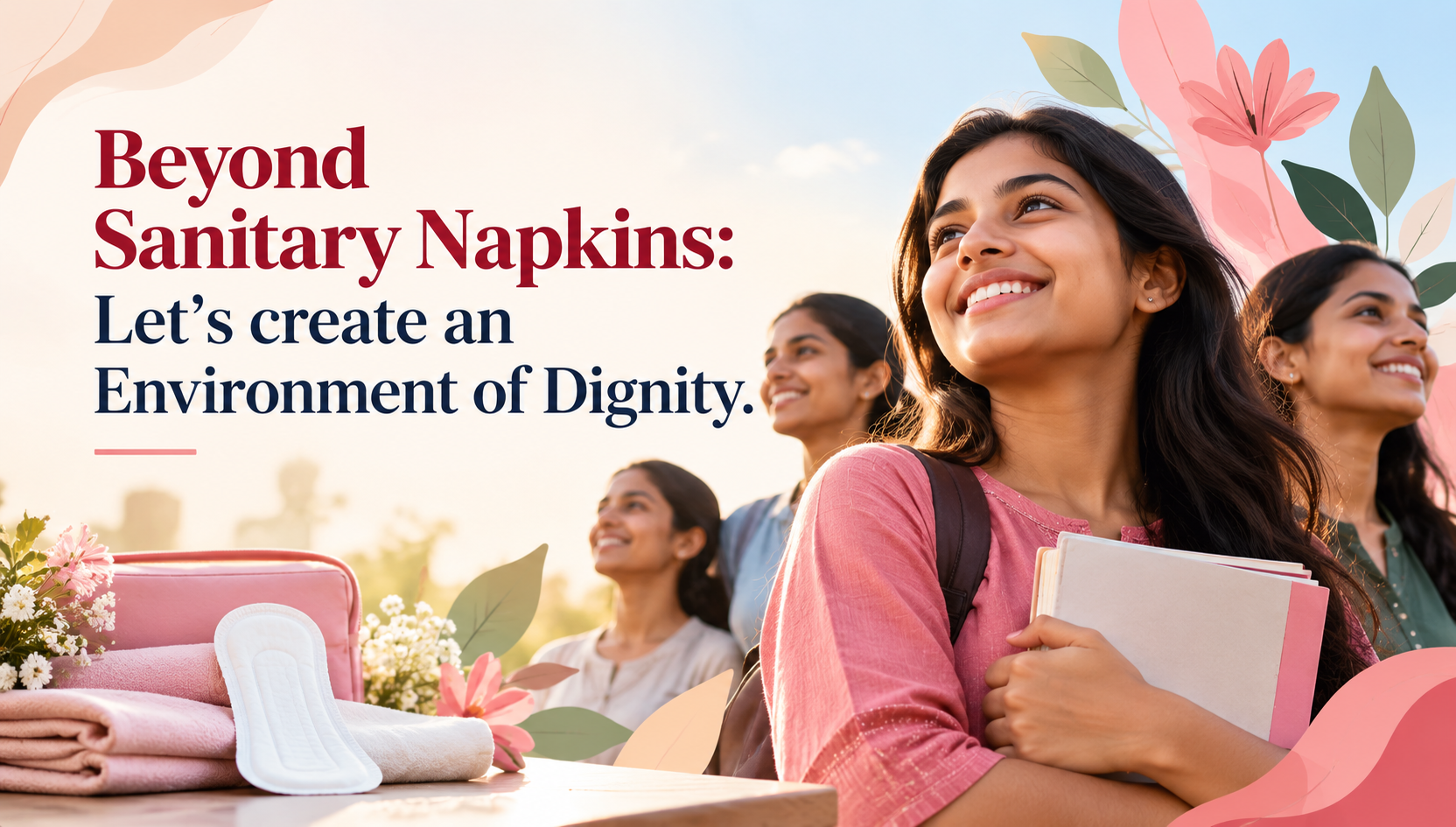
Beyond Sanitary Napkins: Creating a safe environment
The solution therefore cannot be limited to providing free sanitary napkins.
Schools require functional, clean and separate toilets for boys and girls, running water, handwashing facilities, privacy and safe disposal mechanisms along with proper menstrual health education and care .
This is very important because good infrastructure and health hygiene operate together. A clean toilet will provide physical privacy, but if a girl experiences exclusion and menstruation continues to be treated as a taboo it is something shameful.
Therefore, menstrual health requires both infrastructure and awareness.
The Constitutional Promise
The larger constitutional lesson is that rights cannot remain merely theoretical.
A girl may technically have a school to attend, but if she cannot safely manage her menstruation there, her access to education is incomplete. She may technically have a right to life, but if she is compelled to manage a natural biological process in unhygienic and humiliating conditions, the constitutional promise of dignity remains incomplete.
The Supreme Court's approach in Dr. Jaya Thakur brings Articles 14, 21 and 21A into a common framework. Equality ensures meaningful participation, Article 21 protects dignity, health and bodily autonomy, and Article 21A protects access to education. Menstrual health lies at the intersection of all three.
Ultimately, clean toilets, sanitary products, water, privacy and menstrual education should not be treated as additional conveniences provided only when resources permit. They are part of creating the conditions in which a girl can participate in school with dignity.
Just as food is a basic necessity for physical sustenance, the basic facilities required to manage men-struation safely are necessary for a girl to participate fully in education and public life. Menstrual health is therefore not a peripheral issue. It is a question of dignity, equality, health and education, and the Constitution must be understood in a manner that makes these rights real in the everyday lives of young girls.